

A Simple Idea Turned Comprehensive Project
What started as a personal challenge to test my development skills in API integration rapidly transformed into a fully-featured anime platform. My goal was to work with Jikan's anime API, a widely used, free API that provides anime data. However, despite its robust dataset, it posed a significant challenge due to its strict rate limits—allowing only 60 requests per minute. Overcoming these constraints became the first major milestone in my project, setting the stage for a broader development journey.
Overcoming API Limitations
The early days of development were spent tackling the API’s limitations. Given the request cap, I needed to ensure that my platform could efficiently retrieve and store anime data without running into performance bottlenecks. I implemented several optimization techniques, including:
- Request Bundling: Grouping multiple data requests into single API calls to minimize request overhead.
- Caching Mechanisms: Storing frequently accessed data in a local cache, reducing unnecessary API calls and server caching for crucial pages.
- Rate Limiting and Debouncing: Managing the timing of requests to prevent exceeding the API’s rate cap.
- Pagination: Breaking down large datasets into manageable chunks for smoother data retrieval.
- Intersection Observer API: Ensuring API requests were only triggered when components entered the viewport, reducing unnecessary requests and improving initial loading time.
The platform needed to be both fast and slow at the same time—fast for the end-user experience but intentionally slow in the backend to avoid exceeding API rate limits. This balance was a critical aspect of performance optimization and required careful tuning.
Additionally, I built a PostgreSQL database using Supabase to store critical metadata locally. This allowed for near-instantaneous data retrieval without repeated API calls. Through these optimizations, I turned the API’s limitations into an opportunity to enhance my backend efficiency and scalability.
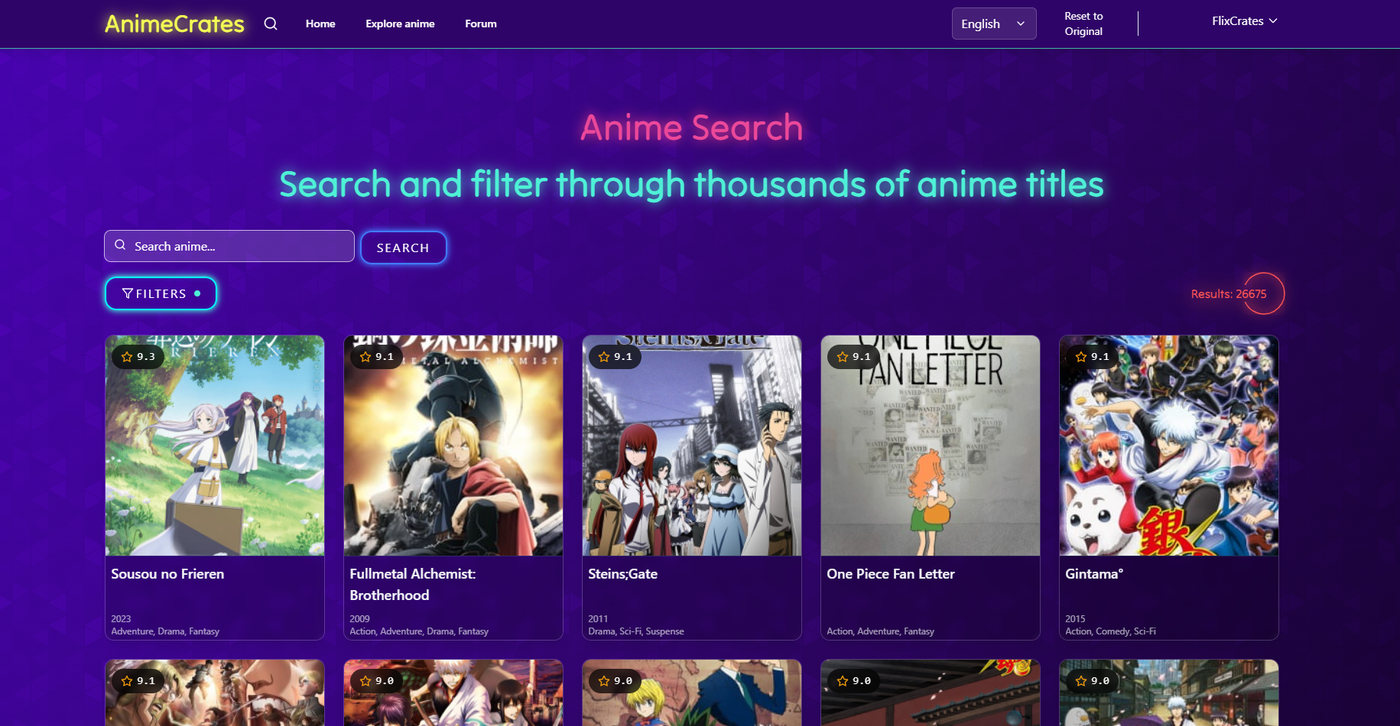
Exploring API Data: Overcoming Schema Discrepancies
One of the unexpected challenges came from exploring and integrating API data. Different endpoints in Jikan’s API had varying data schemas—some lacked certain fields while others provided conflicting information. Since I wanted to merge data from multiple endpoints into a single, unified results output, I had to find a way to standardize the data structure.
This discrepancy made it particularly difficult to apply filtering and sorting mechanisms. Filters needed to account for missing fields while maintaining consistency in the displayed results. Addressing this issue required extensive testing, mapping fallback values, and creating conditional handling logic to ensure seamless integration. This problem-solving process significantly strengthened my ability to work with inconsistent third-party data sources.
Expanding Functionality: Beyond API Integration
With the foundational API work completed, I shifted focus toward adding user-centric features. I wanted to create a more engaging experience beyond just displaying anime data. The key additions included:
- Personalized Ratings and Watchlists: Users can rate and track their favorite anime, requiring a robust database structure.
- Advanced Filtering Systems: Dynamic filters based on genre, release year, popularity, and user preferences.
- Multi-Language Support: Google Translate integration enabled users from different linguistic backgrounds to access content easily.
One of the most interesting challenges arose during the Google OAuth implementation. Initially, I noticed that user-customized names were being overwritten by Google’s metadata during session refreshes. To resolve this, I created a separate database column dedicated to storing user-defined names, queried post-authentication. This simple yet effective fix ensured that users retained control over their chosen display names.
Designing a Cyberpunk Aesthetic
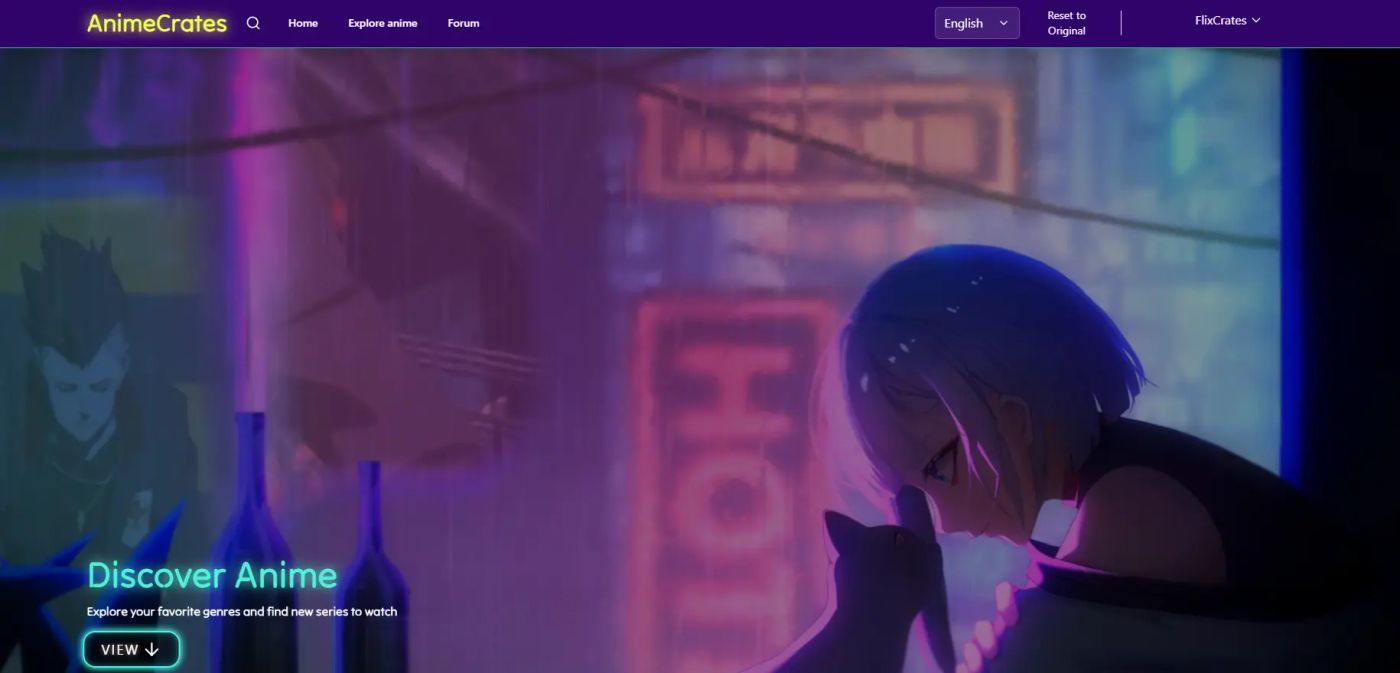
Since anime and cyberpunk culture often overlap, I wanted the platform’s design to reflect a futuristic, neon-lit Tokyo-inspired aesthetic. It had to be also not too serious as this is anime. To achieve this, I used:
- Neon-Style Typography: Custom CSS effects that mimic neon tube lighting, giving text a glowing, cyberpunk feel.
- Dark UI with Vibrant Highlights: A sleek, dark interface punctuated with neon blues, purples, and pinks to enhance the visual appeal.
- Smooth Animations: Subtle hover effects, transitions, and dynamic UI elements to make interactions feel fluid and modern.
This design choice not only enhanced the user experience but also reinforced the immersive feel of the platform, aligning perfectly with its anime theme.
Exploring Video Content Integration: A Technical and Ethical Dilemma
Encouraged by the platform’s success, I explored the possibility of integrating anime episode streaming. Initially, I researched legal APIs that provided streaming access but found them either limited in content or locked behind paywalls. As an alternative, I implemented a backend engine to aggregate content from multiple anime portals, successfully retrieving complete episode databases.
However, while the technical implementation was successful, the legal and ethical considerations became a key concern. Content aggregation from external sources often enters a gray area of copyright law. After careful consideration, I decided not to publicly release the content-scraping functionality. This decision underscored my commitment to balancing technical capabilities with ethical responsibility.
Project Outcomes and Reflections
This project was more than just a technical challenge; it was a learning experience that demonstrated my ability to:
- Solve complex technical problems creatively and efficiently.
- Optimize API interactions using advanced data handling techniques.
- Design an engaging and user-friendly platform, emphasizing both functionality and aesthetics.
- Make thoughtful technical decisions, considering both feasibility and ethical implications.
- Adapt and expand scope based on user needs and feedback.
Through a combination of methodical problem-solving, design considerations, and a strong focus on user experience, I created a platform that is not only technically sound but also engaging and visually appealing. This project serves as a testament to my ability to handle complex development challenges while keeping usability and ethical concerns at the forefront.
Links to the live demo and source code can be found in project description here:
https://appcrates.netlify.app/project/anime-platform